REFRIGERANT LEAKS: A TRIPLE THREAT TO GROCERY CHAINS’ SUSTAINABILITY, COMPLIANCE, AND COSTS
- Amrit Robbins
- Oct 2, 2024
- 2 min read
Updated: May 28

Key Takeaways
Refrigerant leaks create three simultaneous problems: massive climate impact (GWP thousands of times higher than CO2), regulatory exposure, and direct financial cost.
Grocery chains face EPA enforcement penalties, state-level fines, and sustainability reporting pressure all at once.
The question is no longer whether to act on refrigerant leaks — it's which approach delivers the fastest ROI.
Axiom Cloud's software-based solution addresses all three threats with a single no-hardware deployment.
early refrigerant leak detectionn addresses all three dimensions simultaneously — compliance, cost, and sustainability — by catching leaks in days rather than months.
California operators face additional California refrigerant compliance obligations under CARB that layer on top of federal AIM Act rules — with stricter repair timelines and monthly inspection requirements.
What is the environmental impact of HFC refrigerant leaks from commercial grocery refrigeration?
Refrigerants are among the most potent greenhouse gasses, with a global warming potential 1,500 to 5,000 times greater than carbon dioxide. Combine that with the staggering fact that 25% of refrigerant leaks out annually in the average grocery store, and you’re looking at a climate crisis in the making.
How much do refrigerant leaks cost a typical grocery chain annually in refrigerant replacement, energy, and penalties?
Refrigeration is the elephant in the room for grocery chains—impacting sustainability, compliance, energy use, and maintenance. Without control over this critical system, companies face challenges across all four areas. Refrigerant leaks are not just a sustainability issue; they’re a financial burden and a compliance risk.
How do refrigerant leaks simultaneously create EPA compliance risk, energy waste, and food safety liability?
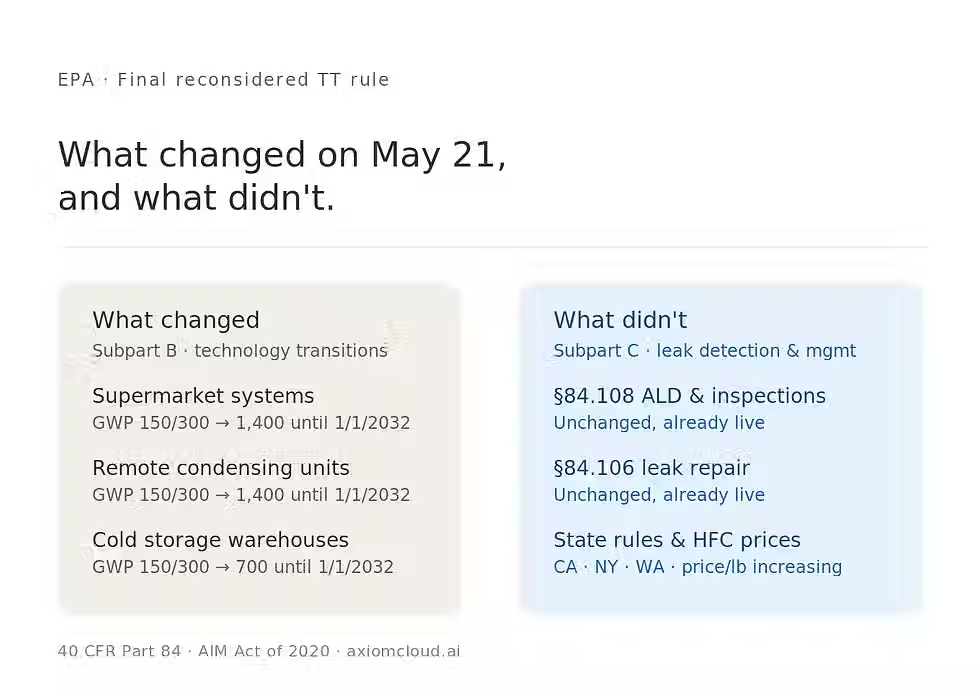
The EPA’s AIM Act, enacted in 2020, is already considered one of the most impactful climate actions in U.S. history. Enforcement is serious, with significant fines for non-compliance. The EPA has made HFC enforcement a priority for the next four years, and grocery retailers will feel the pressure. Leaks are often the top driver of Scope 1 emissions and can lead to costly cooling outages.
📊 Stat: A typical supermarket loses 25% of its refrigerant charge annually to leaks. At current R-404A prices (~$25–40/lb) and 2,000–5,000 lb total store charge, that's $12,500–$50,000/year per store in refrigerant costs alone. R-404A has a GWP of 3,922. (Source: EPA GreenChill Partnership)
The question isn’t if you should act, but how.
Axiom Cloud’s software-driven solution offers a fast, low-cost way to reduce leaks, cut emissions, and ensure compliance—without the need for on-site hardware or visits. If you’re serious about reducing costs and tackling emissions, it’s time to explore a solution that checks all the boxes.
Want to dive deeper into this urgent topic? This video from our CEO Amrit Robbins to see how Axiom Cloud can help your business tackle refrigerant leaks head-on.

Comments